2 November 2026
Field notes: the tanker that looked laden from above and left port empty
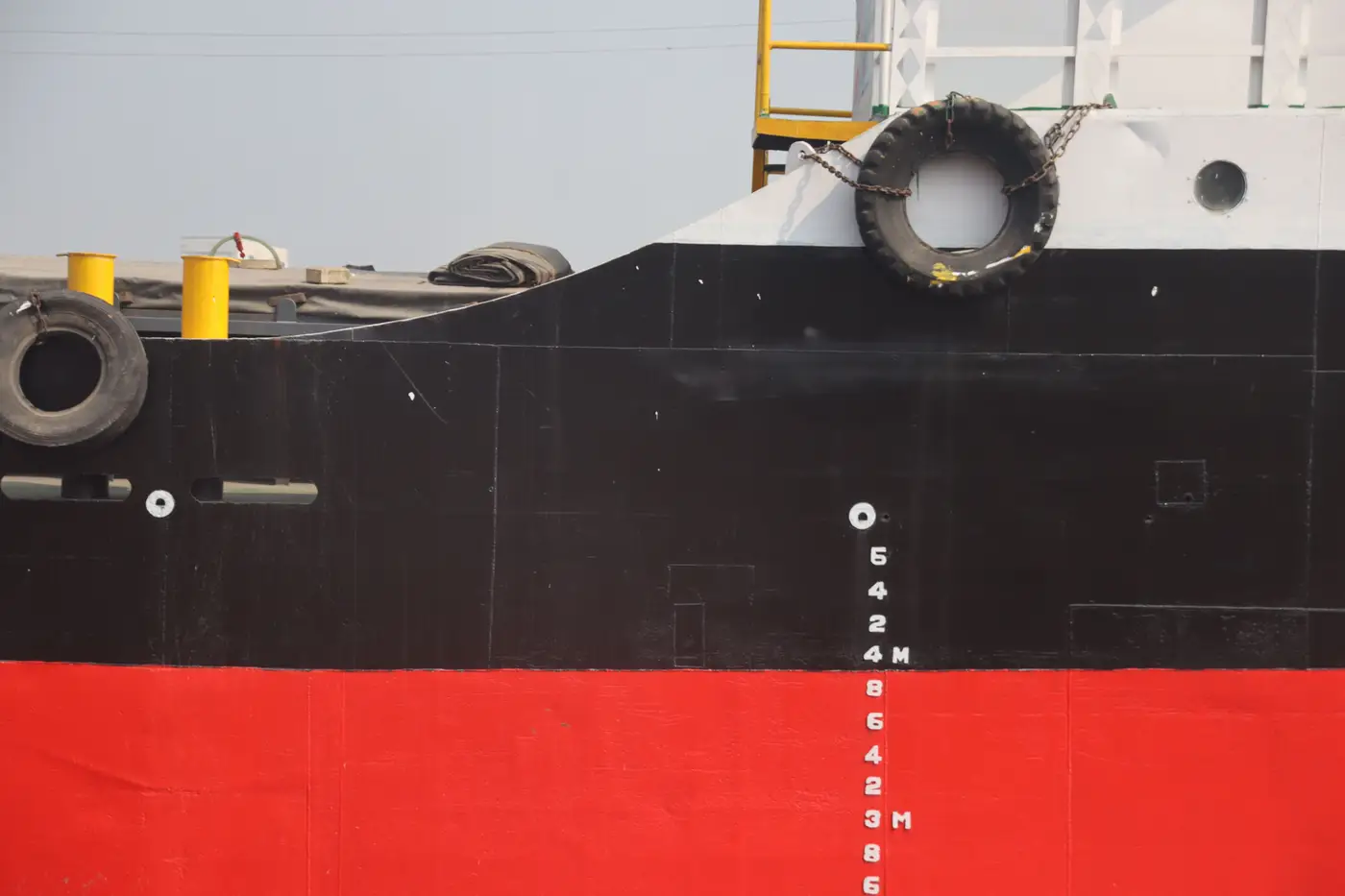
A desk I used to sit near had a running joke about one particular product tanker. Every time it showed up in the overhead pass, someone would say "there she is, riding low again," and every time, the next port call report said otherwise. Ballast, not laden. Three times running.
The vessel wasn't doing anything strange. It had a wide black boot-top band, the kind some owners paint tall on purpose so the hull looks presentable between drydockings and doesn't show rust streaks at the light-draft line. From directly overhead, at the resolution most of us were working with, that band reads as hull, full stop. You can't tell where the paint ends and the actual waterline sits unless you know to look for the subtle color break in the water itself, not the color break on the steel.
That paint band pushed the apparent freeboard down, and a short freeboard reads as a heavy, laden ship. The ship was carrying nothing but ballast water and had been for a week, and the only reason the desk caught the mismatch was that someone cross-checked against a berth schedule and noticed the numbers didn't add up for what should've been a load call out of that terminal.
That's the freeboard illusion in one sentence: a hull marking doing the geometry's job badly. The problem lives in the reading. The same vessel, imaged on a clear day at good GSD, will throw a wrong flag every single time if the person or the model doing the read treats paint as waterline.
Owners paint their boot-tops for all kinds of reasons that have nothing to do with helping or hindering anyone tracking cargo state. Some bands are tall because the yard that last painted the ship used a template built for a deeper-drafted sister vessel. Some are tall because a fresh coat job ran over the old line and nobody repainted it tight. None of it is deliberate. All of it matters if you're trying to read draft from a single still frame instead of a hull.
Knowing the specific hull fixes this. A vessel you've seen six times in ballast and three times laden gives you a baseline: where the waterline sits against that painted band, under conditions you already know the answer to. Read it cold, once, with no history, and a tall boot-top will fool you about as often as it'll tell you the truth. Read it against a pattern for that hull, and the paint stops mattering. You're measuring the shift, not the absolute line.
This is also, not coincidentally, why we don't publish a loading-state flag as a one-shot snapshot. A single weekly pass on a vessel we've never seen before is a guess dressed up as a reading. A flag built off a run of passes on a hull with known paint, known trim behavior, known ballast draft, is something closer to a call you'd actually trade on.
The real lesson from that tanker was about trusting a single photo on a hull you don't know yet, paint band and all. The ships with the ugliest paint jobs are, if anything, the ones that teach you the most, because they force you to stop reading the band and start reading the water.
If you're tracking a vessel list where this kind of misread costs you a position, that's the problem Ship Loading State is built around: weekly overhead reads against a hull's own history, not a cold guess off one frame. Worth a look if freeboard calls are part of how you trade.