8 October 2026
Freeboard vs draft: what's the difference, and why it matters for tracking a vessel
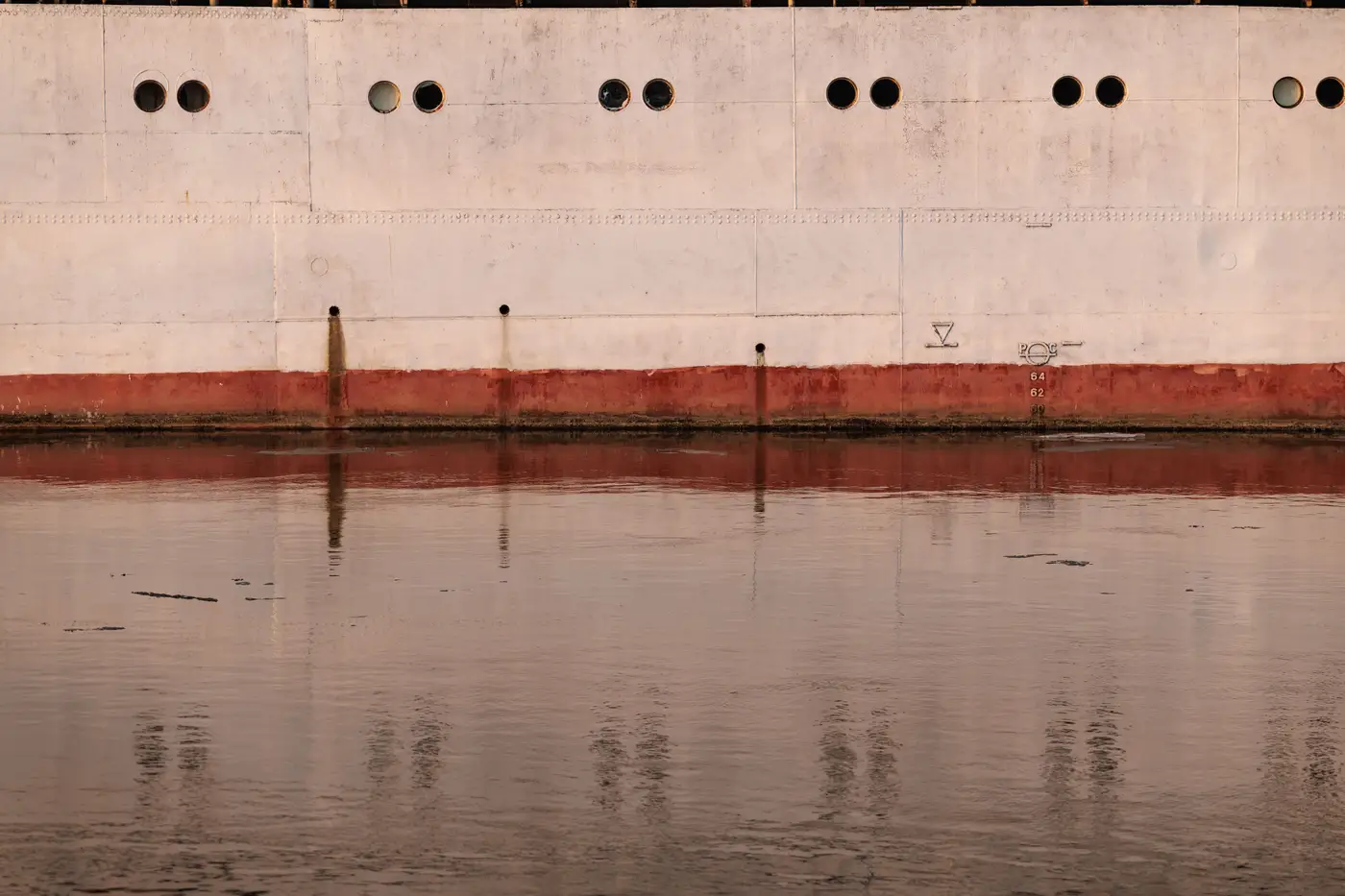
A vessel report crosses the desk with a draft figure, and someone asks whether that number is the draft or the freeboard. The two terms get used almost interchangeably in conversation around the office, but they measure the hull from opposite directions. Mixing them up when you're trying to call a cargo state sends you chasing the wrong signal.
What draft measures
Draft is the vertical distance from the waterline down to the bottom of the keel. It's the number stamped on the hull at the draft marks, read in meters, and it's the figure a port agent or pilot quotes when a vessel reports its arrival condition. A deep draft means more of the hull sits below the water. For a bulker or tanker, draft tracks cargo weight almost directly: load more grain or more crude, and the ship sits lower, so draft increases.
What freeboard measures
Freeboard is the mirror image: the vertical distance from the waterline up to the main deck. It's marked by the load line painted amidships, the one a surveyor checks against season and route to see how low a vessel is allowed to sit. As draft goes up, freeboard goes down, because the two are splitting the same hull depth between them. A vessel in ballast rides high, so freeboard is large and draft is shallow. A vessel loaded to her marks rides low, so freeboard shrinks toward the load line while draft approaches its maximum for that voyage.
The relationship is just arithmetic: draft plus freeboard equals the molded depth of the hull at that point, a fixed number for a given vessel. Know one and you can work out the other, provided you know where the deck line sits. In practice, desk analysts lean on freeboard more than draft, because freeboard is the measurement you can see without boarding the vessel. Draft marks are small, and on a loaded bulker riding low in dirty water they're often half submerged and unreadable even from a launch alongside. Freeboard, read as the strip of hull visible between waterline and deck, is the one you can actually estimate from a photo or an overhead pass. That's exactly why it's become the shortcut for guessing cargo state when a port call report hasn't landed yet.
Why this distinction matters for a trading desk
Knowing which measurement you're looking at changes the call you make before the bill of lading shows up. A thin freeboard reading tells you the vessel is riding deep, consistent with cargo on board. A tall freeboard, hull showing well above the waterline, says ballast, or at best a partial load. Making that call takes a sense of how much hull is showing, measured against where that vessel's load line sits when she's fully laden, not the exact draft figure in meters.
That's the basis for reading loading state from imagery instead of waiting on a dock report: a weekly overhead pass that measures the visible waterline against the hull gives you a laden, part-laden, or ballast flag without an agent's email or an AIS draft field that can lag, or simply go unreported on older tonnage.
One thing worth keeping in mind: freeboard shifts with trim, list, and how a vessel rides in a seaway, so a single read on a pitching ship is noisier than one taken at a quiet anchorage. Hull form matters too, since a boxy bulker and a fine-lined tanker don't show freeboard the same way at the same draft. That's part of why optical draft reading is still being proven across hull types rather than treated as settled.
If AIS gaps and stale draft fields are the thing slowing your vessel calls, Ship Loading State is worth a look for the pilot list.