8 October 2026
What is a deadweight scale, and how do traders actually use it?
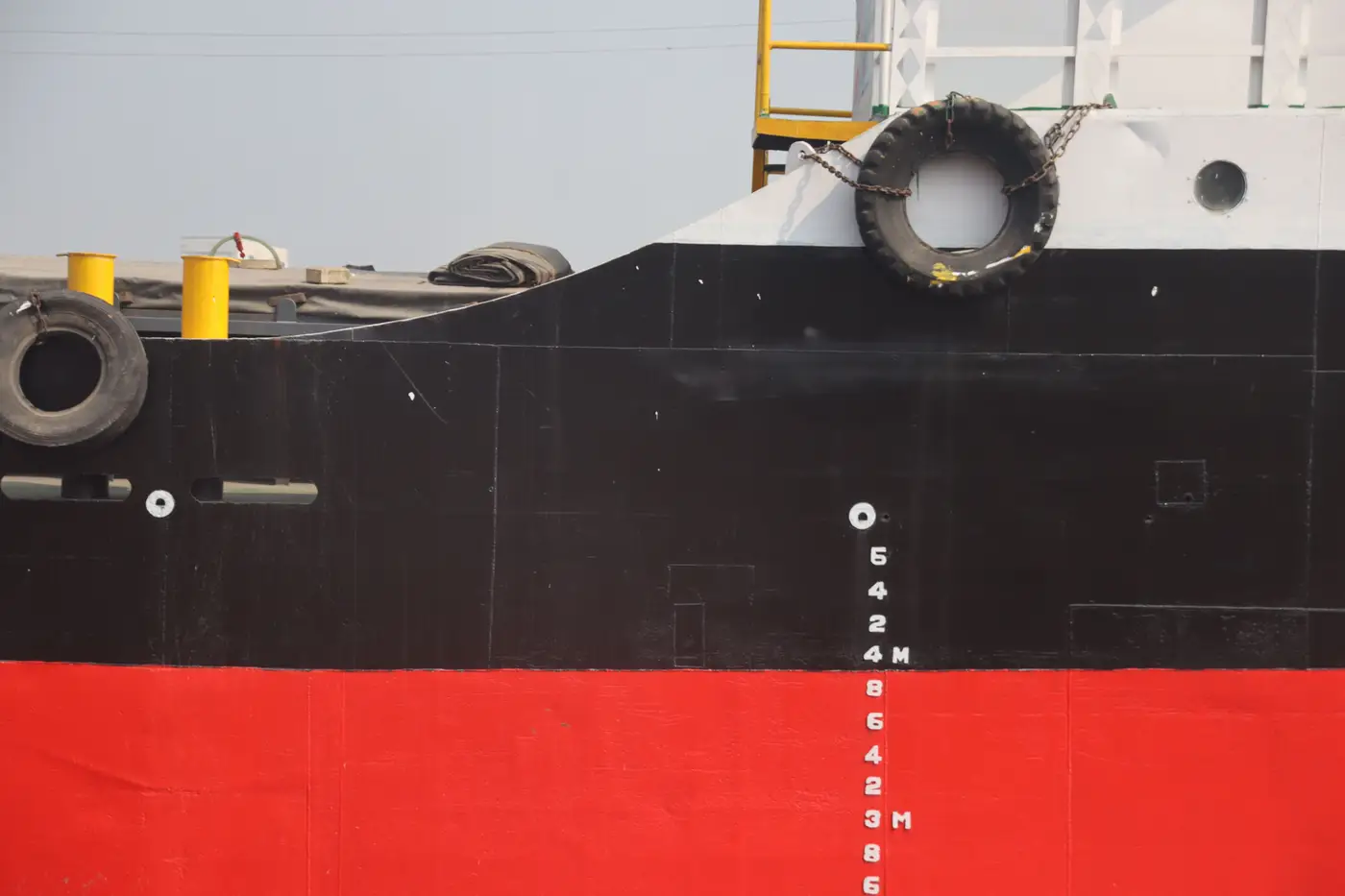
If you've spent any time around a chartering desk, you've heard someone ask "what's she drawing?" before they ask anything else about a vessel. That question is really asking one thing: how much cargo is on board, and the deadweight scale is the tool that answers it.
The deadweight scale, explained
Every vessel comes with a deadweight scale, a table (sometimes a curve) printed in the ship's stability booklet that converts mean draft into displacement, and from displacement into deadweight. It's built by the naval architect for that specific hull, because no two ships carry weight the same way between keel and summer marks.
Read it correctly and a draft reading in meters becomes a tonnage figure. Read the wrong column, or round the wrong direction, and you're off by hundreds of tonnes on a parcel that might only be a few thousand tonnes to begin with. That's why the scale matters more on smaller parcels and specialized tonnage than on a VLCC running a full cargo, where small draft errors wash out against the total.
The mechanics are simple enough once you've done it a few times:
- Take the forward, mean, and aft drafts off the draft marks or the survey
- Correct for trim and for the vessel not actually sitting on an even keel
- Correct for density, since the ship floats differently in seawater versus brackish river water versus fresh water at a berth
- Cross-reference the corrected mean draft against the deadweight scale to get displacement
- Subtract lightship weight (and constants, bunkers, stores) to land on cargo weight
Desks that still do this by hand, or pay a surveyor to do it dockside, aren't being old-fashioned. A proper draft survey is still the most precise way to pin down loaded quantity when there's a laytime dispute or a bill of lading figure to confirm. It's just slow, and it requires someone physically present with a boat and a tape.
Draft marks, the Plimsoll scale, and what they're not telling you
The draft marks themselves (the numbers painted on bow and stern) give you the raw reading. The Plimsoll mark, the load line disc amidships with its horizontal line and the TF/F/T/S/W/WNA letters, tells you the legal limit for that draft given the season and water type. Neither one, on its own, tells a desk sitting onshore whether a vessel is laden, part-laden, or in ballast right now, today, somewhere off a coast you have no agent at.
That's the gap that actually bites a trading desk. You know the scale math. You know how to read a Plimsoll disc in a photo if someone hands you one. What you don't have is a reliable, repeatable way to check loading state on a vessel that hasn't called a port, hasn't filed a draft survey, and isn't answering AIS draft fields honestly, because AIS-reported draft is self-entered and gets left stale or wrong more often than anyone likes to admit.
Where overhead imagery fits into the draft question
A satellite pass doesn't replace a draft survey, and it won't give you a tonnage figure to three decimal places the way a proper mean-draft calculation does. What it can do is confirm the thing a desk often just needs first: is this vessel sitting high in the water or low, laden or riding in ballast, this week, without a port call or a self-reported AIS field to take on faith.
That's the specific gap Ship Loading State is built around: a weekly flag, laden, part-laden, or ballast, read from freeboard and waterline in directly overhead imagery, with the image date attached so you know exactly when that read was taken. It won't replace your deadweight scale. It's meant to sit upstream of it, telling you which vessels are worth a closer look before you spend time chasing a draft survey that may not exist yet.
If your watchlist has vessels you can't confirm any other way, that's the gap this pilot is trying to close. Get in touch about early access if a weekly loading-state read would save your desk a few calls.