19 October 2026
Load line mark vs. draft mark: what's actually painted on a hull
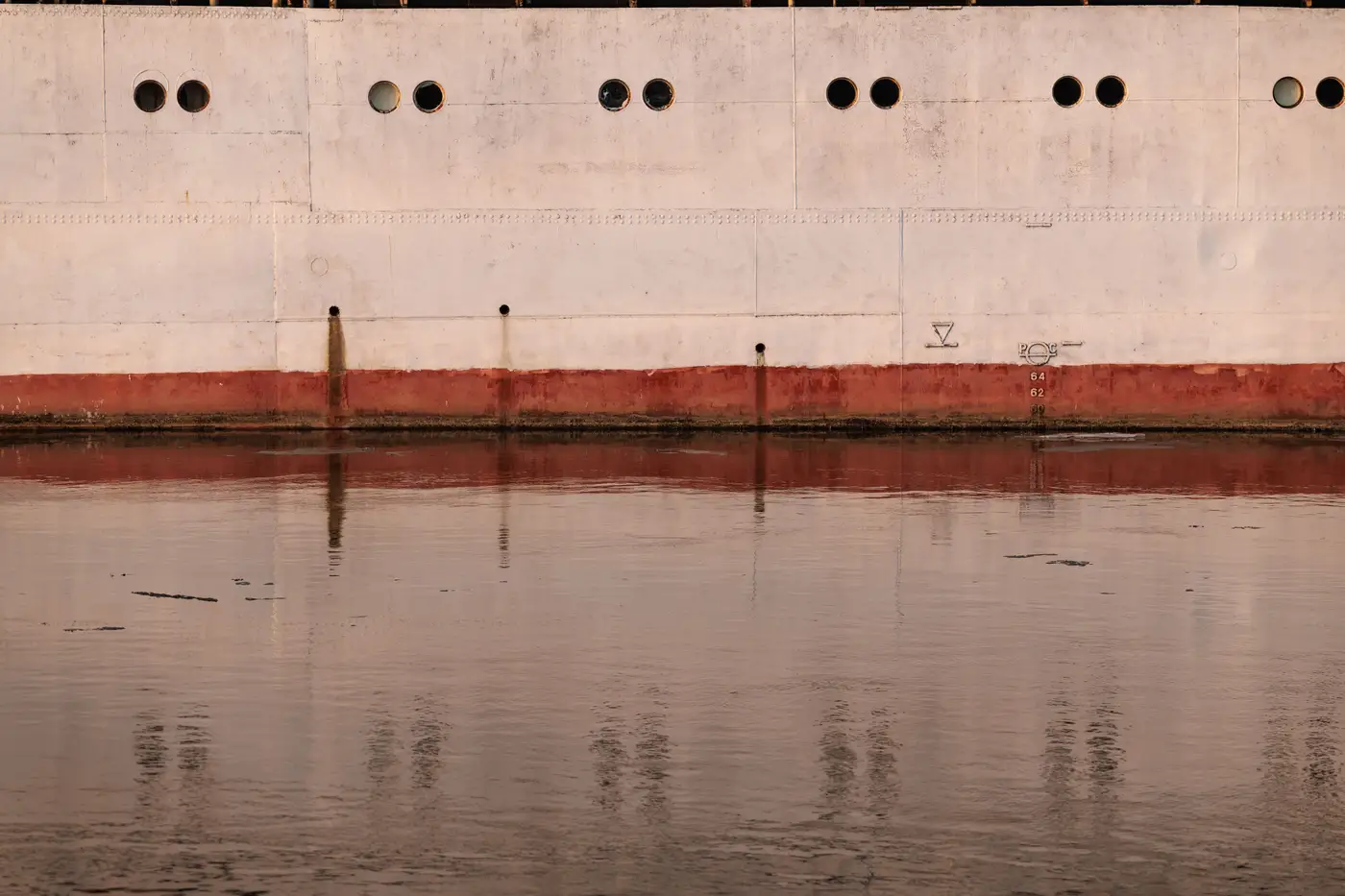
Anyone who's spent time staring at AIS pings trying to guess whether a vessel is sitting heavy or riding high has probably run into both terms in the same paragraph: load line mark and draft mark. They sit close together on the hull, sometimes inches apart near the bow, and they get used interchangeably in casual chat even though they measure two completely different things.
The draft mark tells you what's happening right now
Draft marks are the stacked numbers painted near the bow, stern, and sometimes midships, in Roman numerals or Arabic digits depending on the flag state. Each mark sits at a fixed height on the hull, so reading the draft is just a matter of seeing where the waterline crosses the numbers. If the water sits at the base of the "8" mark, the vessel is drawing 8 meters at that point. Do it at bow and stern and you get trim. Do it reliably across a hull series and, in theory, you can back into displacement and loading state.
That's the "in theory" part that makes this a harder read than it sounds. Draft marks change meaning constantly, because they're reporting a live condition: cargo loaded, ballast taken on, fuel burned, trim adjusted. A draft reading from a port call report three days ago tells you almost nothing about where that vessel sits today if it's since discharged at a second berth or taken on bunkers.
The load line mark doesn't move with cargo
The load line mark, which most people still call by its old name, the Plimsoll line, is a fixed reference. It's a circle with a horizontal line through it, set at a specific point on the hull by the vessel's classification society when the ship was built or last surveyed. That point marks the maximum draft the vessel is legally permitted to load to, under the freeboard rules assigned to that hull.
Next to the circle sit a short stack of horizontal lines, usually labeled with letters: TF, F, T, S, W, WNA. Those are the load line zones. Tropical, Fresh, Tropical Fresh, Summer, Winter, Winter North Atlantic, each one giving a slightly different maximum draft depending on water density and the sea conditions a vessel is expected to meet in that zone at that time of year. A ship loading in the Baltic in January is held to the Winter North Atlantic line even if her Summer line sits deeper in the water. The load line mark, in other words, is a limit set once and rarely revisited. The draft mark is a reading taken every time someone looks.
Freeboard deck is the reference point underneath all of this
Both marks ultimately trace back to the same structural reference: the freeboard deck. That's the uppermost complete deck exposed to weather and sea, the one used to calculate freeboard, which is the vertical distance from the waterline up to that deck. Freeboard and draft are two ways of describing the same relationship between hull and water. More draft means less freeboard, and vice versa. When a surveyor assigns the load line position on a new hull, they're working back from the freeboard deck and the vessel's stability calculations, not from any particular cargo plan.
For a desk tracking positions, the practical distinction is this: the load line mark tells you the ceiling, the physical and regulatory limit on how deep that specific hull is ever allowed to sit. The draft mark, read on any given day, tells you how close to that ceiling the vessel currently is. Knowing both gives you a rough sense of loading state, laden, part-laden, or in ballast, without needing a stem-to-stern cargo manifest.
That's also why optical reads of a vessel's waterline are a live problem, not a solved one. Freeboard varies by hull form, trim, and sea state, and reading it consistently from overhead imagery across different vessel types is still being worked out rather than something you can buy off a shelf. If that's the gap you're trying to close on your own book of tracked tonnage, Ship Loading State is building toward exactly that and is taking names for the early access pilot list.
Weekly flags against freeboard and waterline, dated to the source image, are worth signing up for if they spare your desk even a handful of port call calls a month.