16 November 2026
Ballast water exchange vs. ballast condition: why BWE logs don't flag draft
A broker mentioned last month that a ship had "done its ballast exchange" mid-ocean, like that settled the question of whether she was carrying cargo. It doesn't. Ballast water exchange and ballast condition are two different things that happen to share a word, and conflating them has sent more than one desk analyst chasing the wrong data point.
What ballast water exchange actually is
Ballast water exchange, or BWE, is an environmental compliance procedure under the IMO's Ballast Water Management Convention. A vessel takes on seawater as ballast in one region, typically a port, and is required to exchange that water in open ocean, usually at least 200 nautical miles from shore and in water at least 200 meters deep, before discharging it somewhere else. The point is biological: you don't want organisms from a port in, say, the Pearl River Delta getting dumped into a harbor in the Gulf. BWE logs get checked by port state control. They go into the Ballast Water Management Plan the vessel carries. None of that paperwork says anything about how much cargo is in the holds.
A vessel running a full BWE sequence can be laden to her marks, part-laden, or in ballast with no cargo at all. The exchange record documents where the water came from and where it's going. It doesn't touch cargo tonnage. A vessel in ballast condition carries seawater as weight to keep the propeller submerged and the hull trimmed properly when she's got no cargo aboard. A laden vessel still carries some ballast too, just less of it, trimmed to balance the cargo load. BWE happens regardless of which state she's in, because the convention cares about where the water came from and where it's going, not about tonnage in the holds.
Why the two get confused on a desk
The confusion is understandable because both terms use "ballast" and both show up in AIS remarks, port agent cables, and vessel particulars. A ballast water management certificate is a standing document, renewed periodically, that says the vessel has a compliant system. It travels with the ship regardless of voyage. A loading state, laden or part-laden or ballast, changes voyage to voyage, sometimes leg to leg. One is a regulatory status. The other is a physical condition of the hull in the water right now.
If you're trying to confirm whether a tanker that cleared a load port three days ago is actually carrying the cargo the charter party says she is, a BWE record won't help you. It tells you she complied with an environmental rule somewhere in open water. It says nothing about freeboard, draft, or whether she's riding high or low. Port call reports eventually catch up with loading status, but by the time an agent's report lands, the position data is already a few days stale, and a desk tracking freight or arbitrage windows doesn't always have a few days to spare.
What actually reads loading state
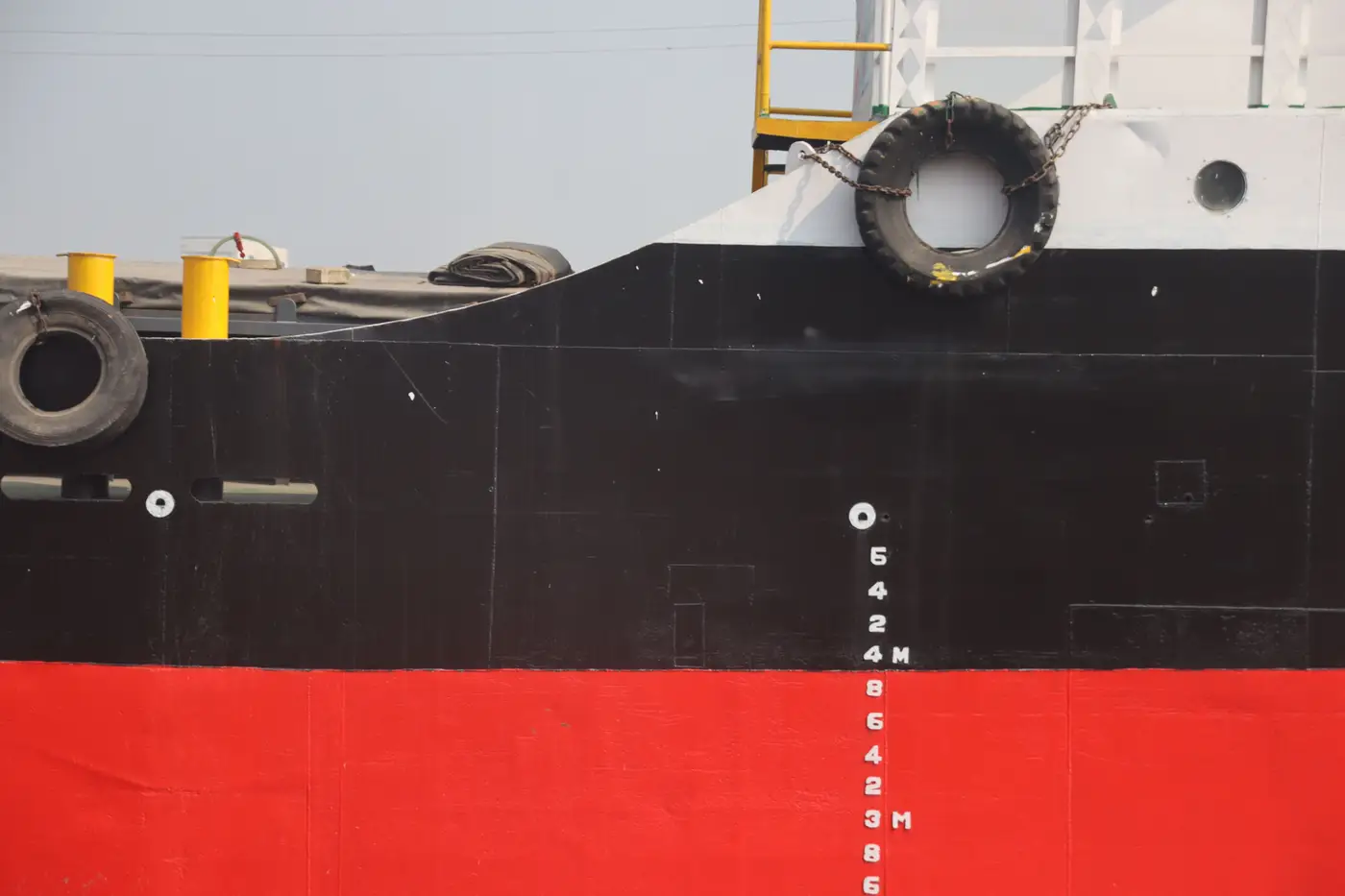
Draft marks painted on the hull are the traditional answer, and they're accurate when someone's standing on a tug close enough to read them, or when a surveyor's report comes through. That's the catch: it requires a physical check, a port call, or a boarding, and a lot of vessel positions on a trading desk's watch list are mid-voyage, not sitting at a berth waiting for an inspection.
Overhead imagery is the other route. Freeboard and waterline are visible from directly above, and a vessel riding high with a visible waterline well below the load line reads differently than one sitting deep with the waterline close to the deck edge. That's the gap Ship Loading State is built around: a weekly read of freeboard and waterline from VHR satellite or aerial imagery, flagged laden, part-laden, or ballast, with the date of the source image attached so you know exactly how fresh the read is.
BWE compliance and loading condition will keep showing up in the same sentence because they share a word and because both relate to ballast tanks. They don't share an answer. If your watch list needs the physical one, the pilot list is open.